Coloring Pages for 4 Year Olds — How to Support Development and Choose the Right Difficulty

Czterolatek a kolorowanie — nowy etap
Między trzecim a czwartym rokiem życia w koordynacji ruchowej dziecka zachodzi duża zmiana. Czterolatek zaczyna trzymać kredkę trzema palcami zamiast całą dłonią. Jego ruchy są bardziej celowe, a uwaga — dłuższa i bardziej skupiona. Oznacza to, że kolorowanki dla 4-latka mogą być bardziej zróżnicowane i bogatsze w detale niż te dla trzylatków.
Jednocześnie pamiętaj, że każde dziecko rozwija się we własnym tempie. Niektóre 4-latki chętnie biorą się za dość szczegółowe rysunki, inne wciąż wolą prostsze formy. Obserwuj swoje dziecko i dobierz materiały do jego aktualnego etapu — nie do metrykalnego wieku.
Co wyróżnia kolorowankę odpowiednią dla 4-latka?
Umiarkowane detale
Czterolatek potrafi już kolorować mniejsze pola niż trzylatek, ale wciąż nie radzi sobie z bardzo drobnymi detalami. Idealny rysunek dla 4-latka to taki, który ma kilka wyraźnych sekcji do pokolorowania — np. ciało i grzywę konia, trawę i niebo, karoserię i okna samochodu.
Unikaj rysunków, gdzie postacie mają wiele drobnych wzorów lub małych powierzchni. Zamiast tego szukaj ilustracji z wyraźnymi podziałami na duże, odrębne strefy kolorowania.
Rozpoznawalne postacie i sceny
W czwartym roku życia dzieci bardzo intensywnie rozwijają wyobraźnię i zaczynają tworzyć własne narracje wokół rysunków. Kolorowanka przestaje być tylko ćwiczeniem motorycznym — staje się historią. Dlatego warto wybierać sceny, które coś opowiadają: zwierzę w swoim środowisku, pojazd w ruchu, bohater bajki w przygodzie.
Czterolatki często “rozmawiają” z rysunkami podczas kolorowania — to oznaka zdrowego rozwoju wyobraźni.
Możliwość eksperymentowania z kolorami
W tym wieku dzieci zaczynają rozumieć, że słońce “powinno” być żółte, a trawa zielona — ale jednocześnie bardzo lubią łamać te zasady. To świetny czas na rozmowy o kolorach: co się stanie, jeśli pokolorujesz niebo na różowo? Jaki kolor mogłoby mieć magiczne drzewo?
Kolorowanie z 4-latkiem może być piękną lekcją kreatywności i rozmową o świecie.
Jakie tematy trafiają do 4-latków?
Pojazdy i maszyny
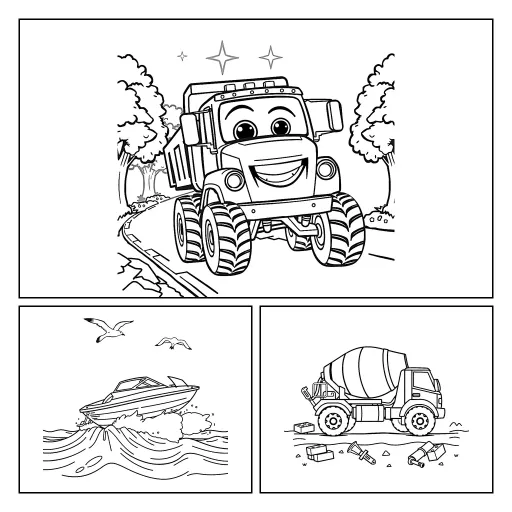
Czterolatkowie, szczególnie chłopcy, często przechodzą przez intensywną fascynację pojazdami. Samochody, ciężarówki, traktory, koparki, pociągi — to tematy, które przykuwają uwagę i motywują do kolorowania. Pojazdy mają też tę zaletę, że naturalne kolory są dobrze znane dziecku — czerwone auto, żółty autobus — co ułatwia rozmowę o barwach.
Nasz zestaw Pojazdy zawiera ponad 20 ilustracji z różnymi środkami transportu, zaprojektowanych z myślą o dzieciach w wieku przedszkolnym.
Księżniczki i świat baśni
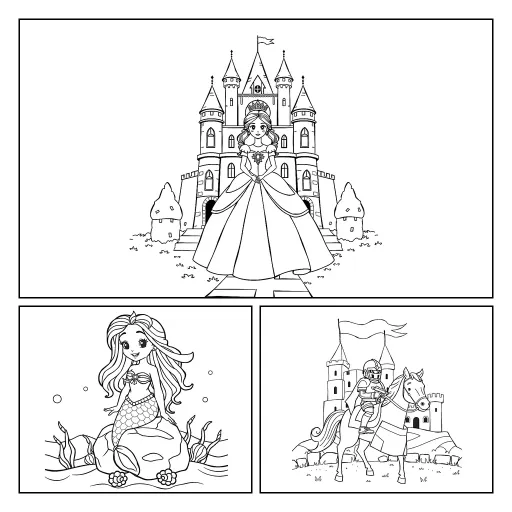
Wiele 4-latek uwielbia księżniczki, zamki i magiczne stworzenia. Kolorowanie sukni, korony czy różdżki to doskonałe ćwiczenie precyzji — ale w kontekście, który dziecko kocha. Baśniowe elementy pobudzają też wyobraźnię: “A co ta księżniczka robi? Dokąd idzie?”
Zestaw Księżniczki z JustColor zawiera księżniczki w różnych strojach i scenach — od zamkowych komnat po magiczne lasy.
Zwierzęta na farmie i w dżungli
Farma i dżungla to klasyczne tematy, które nie wychodzą z mody. Czterolatki znają już większość popularnych zwierząt i chętnie je kolorują. Dodatkową zaletą jest możliwość rozmów o tym, co te zwierzęta jedzą, gdzie mieszkają i jak się zachowują.
Jak przedłużyć sesję kolorowania?
Czterolatek ma dłuższą uwagę niż trzylatek, ale wciąż potrzebuje odpowiedniej stymulacji. Kilka sposobów na podtrzymanie zainteresowania:
Opowiedz historię — przed kolorowaniem powiedz coś o rysunku: “To jest lew, który mieszka w afrykańskim buszu. Jak myślisz, jakie ma futro?” To angażuje dziecko zanim jeszcze chwyci kredkę.
Zadaj pytanie — “Jakiego koloru będzie ta sukienka?” lub “Co ten samochód przewozi?” Pytania otwarte zachęcają do myślenia i tworzenia własnej narracji.
Koloruj razem — jeśli drukujesz dwie kopie tego samego rysunku, możecie kolorować razem i porównywać efekty. “Mój lew jest żółty, a jaki będzie twój?”
Wyjdź poza linię — dosłownie. Zachęć dziecko do dorysowania czegoś wokół rysunku: trawy, chmur, kwiatków. To ćwiczenie kreatywności i drobnej motoryki jednocześnie.
Kiedy przejść do trudniejszych kolorowanek?
Obserwuj, czy dziecko:
- Celowo stara się nie wychodzić poza linię
- Wybiera różne kolory dla różnych elementów rysunku
- Koloruje przez 20-30 minut bez zniecierpliwienia
- Prosi o “trudniejsze” rysunki lub takie z “większą ilością do kolorowania”
Jeśli widzisz te sygnały — czas na kolorowanki z nieco większymi detalami, przeznaczone dla 5-6-latków.
Podsumowanie
Kolorowanki dla 4-latka to świetne narzędzie rozwijające motorykę, wyobraźnię i koncentrację. Kluczem jest dobór rysunków z umiarkowanym poziomem detali, rozpoznawalnymi postaciami i tematami, które dziecko kocha. Drukuj, koloruj razem i rozmawiaj — to proste ćwiczenie, które daje mnóstwo korzyści.
Four-Year-Olds and Coloring — A New Stage
Between the ages of three and four, a significant change occurs in a child’s movement coordination. A four-year-old begins to hold a crayon with three fingers instead of their whole hand. Their movements are more purposeful, and their attention span — longer and more focused. This means that coloring pages for 4-year-olds can be more varied and richer in detail than those for three-year-olds.
At the same time, remember that every child develops at their own pace. Some 4-year-olds happily tackle fairly detailed drawings, while others still prefer simpler forms. Observe your child and match the materials to their current stage — not their age on paper.
What Makes a Coloring Page Right for a 4-Year-Old?
Moderate Detail
A four-year-old can color smaller areas than a three-year-old, but still struggles with very fine details. An ideal drawing for a 4-year-old has several clear sections to color — such as the body and mane of a horse, grass and sky, car body and windows.
Avoid drawings where characters have many small patterns or tiny surfaces. Instead, look for illustrations with clear divisions into large, distinct coloring zones.
Recognizable Characters and Scenes
In the fourth year of life, children develop their imagination very intensively and begin to create their own narratives around drawings. Coloring stops being just a motor exercise — it becomes a story. That’s why it’s worth choosing scenes that tell something: an animal in its environment, a vehicle in motion, a story character on an adventure.
Four-year-olds often “talk” to drawings while coloring — this is a sign of healthy imaginative development.
Room to Experiment with Colors
At this age, children start understanding that the sun “should” be yellow and grass green — but they also love breaking these rules. This is a great time for conversations about colors: what happens if you color the sky pink? What color could a magical tree be?
Coloring with a 4-year-old can be a beautiful lesson in creativity and a conversation about the world.
What Topics Appeal to 4-Year-Olds?
Vehicles and Machines
Four-year-olds, especially boys, often go through an intense fascination with vehicles. Cars, trucks, tractors, excavators, trains — these are topics that capture attention and motivate coloring. Vehicles also have the advantage that their natural colors are well-known to the child — a red car, a yellow bus — which makes color conversations easy.
Our Vehicles set contains over 20 illustrations with various modes of transport, designed for preschool-aged children.
Princesses and the World of Fairy Tales
Many 4-year-old girls adore princesses, castles, and magical creatures. Coloring a dress, crown, or wand is an excellent precision exercise — but in a context the child loves. Fairy-tale elements also stimulate imagination: “What is this princess doing? Where is she going?”
The JustColor Princesses set features princesses in various outfits and scenes — from castle chambers to magical forests.
Animals on the Farm and in the Jungle
Farm and jungle are classic themes that never go out of style. Four-year-olds already know most popular animals and enjoy coloring them. An added benefit is the opportunity to talk about what these animals eat, where they live, and how they behave.
How to Extend a Coloring Session
A four-year-old has a longer attention span than a three-year-old, but still needs proper stimulation. A few ways to maintain interest:
Tell a story — before coloring, say something about the drawing: “This is a lion who lives in the African bush. What do you think his fur looks like?” This engages the child before they even pick up a crayon.
Ask questions — “What color will this dress be?” or “What is this car carrying?” Open questions encourage thinking and creating their own narrative.
Color together — if you print two copies of the same drawing, you can color together and compare results. “My lion is yellow, what color will yours be?”
Go outside the lines — literally. Encourage the child to draw something extra around the picture: grass, clouds, flowers. It’s a creativity and fine motor exercise at the same time.
When to Move to More Difficult Coloring Pages
Watch for signs that your child:
- Deliberately tries to stay within the lines
- Chooses different colors for different elements of the drawing
- Colors for 20-30 minutes without impatience
- Asks for “harder” drawings or ones with “more to color”
If you see these signals — it’s time for coloring pages with slightly more detail, designed for 5-6 year olds.
Summary
Coloring pages for 4-year-olds are a great tool for developing motor skills, imagination, and concentration. The key is choosing drawings with a moderate level of detail, recognizable characters, and themes the child loves. Print, color together, and talk — it’s a simple exercise that offers many benefits.
Share this article