Coloring Pages for 3 Year Olds — What to Choose and Why Thick Outlines Matter

Dlaczego 3-latek potrzebuje specjalnych kolorowanek?
Kiedy dziecko ma 3 lata, jego motoryka mała jest wciąż w fazie intensywnego rozwoju. Trzylatek trzyma kredkę całą dłonią — nie trzema palcami jak starsze dzieci. Ruchom brakuje precyzji, zasięg kontroli nad narzędziem jest ograniczony. To zupełnie normalne i nie ma w tym nic złego — ale oznacza, że kolorowanka dla 3-latka musi być zaprojektowana inaczej niż dla 6-latka.
Najważniejszy parametr to grubość i wyrazistość konturu. Im grubsza linia obrysu, tym łatwiej maluchowi “zmieścić się” wewnątrz rysunku. Gdy dziecko wychodzi poza linię — a na początku będzie to robić bardzo często — nie traktuje tego jako porażkę. Ale gdy kontur jest wyraźny i gruby, dziecko szybciej zauważa granicę i intuicyjnie uczy się jej respektować.
Co powinna mieć kolorowanka dla 3-latka?
Wybierając kolorowanki dla trzylatka, zwróć uwagę na kilka kluczowych cech:
Proste, rozpoznawalne kształty
Trzylatek zna już sporo rzeczy ze swojego otoczenia — psa, kota, samochód, jabłko, słońce. Kolorowanka powinna przedstawiać to, co dziecko rozpoznaje bez problemu. Dzięki temu pojawia się radość z “Mamo, to piesek!” — i motywacja do kolorowania.
Unikaj skomplikowanych scen z wieloma detalami. Idealny rysunek dla 3-latka to jeden duży obiekt na białym tle — np. słoń, traktor, ryba. Minimum linii pomocniczych, brak drobnych elementów.
Duże pola do kolorowania
Im większa powierzchnia do pokrycia kolorem, tym lepiej. Duże, otwarte przestrzenie wewnątrz rysunku pozwalają dziecku kolorować swobodnie, bez konieczności precyzyjnego manewrowania kredką. To zarówno przyjemniejsze dla malucha, jak i bardziej efektywne ćwiczenie ruchowe.
Grube kontury (minimum 3-4 pt)
To absolutna podstawa. Cienkie linie, które wyglądają elegancko na monitorze, podczas druku mogą stać się ledwo widoczne. Dla trzylatka taka kolorowanka jest frustrująca — nie widzi wyraźnie, gdzie kończy się biała przestrzeń.
Szukaj rysunków, gdzie kontur ma wyraźną, dobrze widoczną grubość. W zestawach JustColor wszystkie ilustracje są projektowane właśnie z myślą o małych dzieciach — grube linie, proste formy, duże pola.
Jak zacząć kolorowanie z 3-latkiem?
Pierwsze sesje kolorowania powinny być krótkie — 10-15 minut to maximum dla trzylatka. Uwaga dziecka w tym wieku jest jeszcze nietrwała, a dłuższe siedzenie przy jednej czynności może skończyć się frustracją zamiast przyjemnością.
Kilka praktycznych wskazówek:
-
Zacznij od grubych kredek woskowych — są łatwiejsze do trzymania niż cienkie kredki ołówkowe. Dla trzylatka idealne są jumbo crayons lub kredki trójkątne w przekroju.
-
Pozwól na własny wybór koloru — nie poprawiaj, jeśli słoń wychodzi różowy, a trawa jest żółta. To ćwiczenie kreatywności, nie lekcja biologii.
-
Chwal sam proces, nie efekt — “Jak pięknie kolorujesz!” działa lepiej niż “Ale wyjdzie za linię”. Trzylatek potrzebuje pozytywnych wzmocnień.
-
Wydrukuj kilka kopii tej samej strony — jeśli dziecko chce zacząć od nowa albo zakończyło zbyt szybko i chce więcej, masz zapas. To jedna z największych zalet kolorowanek do druku — możesz drukować bez ograniczeń.
Jakie tematy lubią 3-latki?
Na podstawie obserwacji rodziców i wychowawców, 3-latki najchętniej kolorują:
- Zwierzęta — szczególnie znane ze środowiska (kot, pies, krowa, koń) lub zwierzęta z bajek (lew, słoń, żyrafa)
- Pojazdy — samochody, ciągniki, autobusy. Wiele dzieci w tym wieku jest zafascynowanych “maszynami”
- Proste jedzenie — jabłka, banany, truskawki — dobre do nauki kolorów
- Postacie z ulubionych bajek — jeśli znasz ulubionego bohatera dziecka, szukaj w tym kierunku
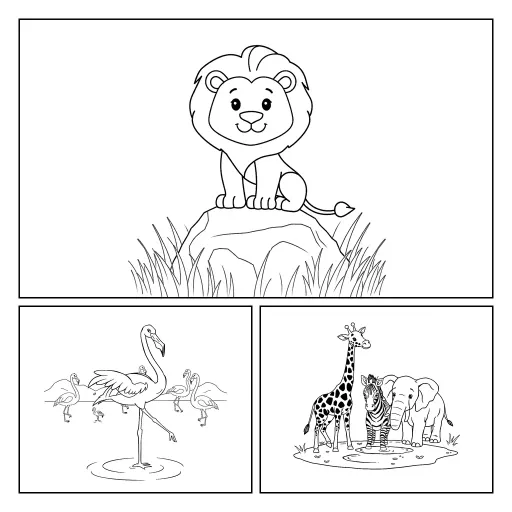
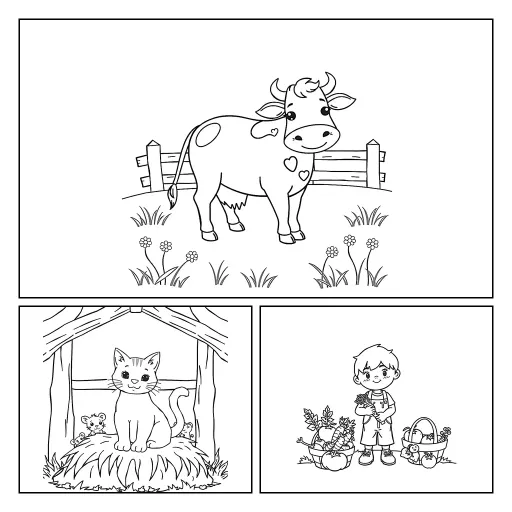
W naszych zestawach Farma i Dżungla znajdziesz mnóstwo ilustracji z dużymi zwierzętami o prostych kształtach — idealnych właśnie dla trzylatków.
Kiedy to za trudne? Sygnały do rozpoznania
Jeśli dziecko po chwili odkłada kredkę i nie chce wracać do kolorowania — to sygnał, że kolorowanka może być za trudna lub za mała. Sprawdź:
- Czy linie są wyraźne i grube?
- Czy rysunki są proste, bez zbyt wielu detali?
- Czy przestrzenie do kolorowania są wystarczająco duże?
Jeśli nie — zmień kolorowankę. Nie ma sensu zmuszać 3-latka do pracy z materiałami, które nie są dostosowane do jego etapu rozwoju.
Podsumowanie
Kolorowanki dla 3-latka to nie tylko zabawa — to wartościowe ćwiczenie przygotowujące do pisania i rozwijające motorykę małą. Klucz to odpowiedni dobór materiałów: grube kontury, proste kształty, duże pola i ulubione tematy. Wydrukuj kilka stron, przygotuj kredki i daj dziecku przestrzeń do eksploracji — bez presji i oceniania.
Why 3-Year-Olds Need Special Coloring Pages
When a child is 3 years old, their fine motor skills are still in intensive development. A three-year-old holds a crayon with their whole hand — not with three fingers like older children. Their movements lack precision, and control over the tool is limited. This is completely normal — but it means that coloring pages for 3-year-olds need to be designed differently than those for 6-year-olds.
The most important parameter is the thickness and clarity of the outline. The thicker the outline, the easier it is for the toddler to “stay inside” the drawing. When the child goes outside the line — and they will do it very often at first — they don’t treat it as a failure. But when the outline is clear and thick, the child notices the boundary more quickly and intuitively learns to respect it.
What Should Coloring Pages for 3-Year-Olds Have?
When choosing coloring pages for a three-year-old, look for these key features:
Simple, Recognizable Shapes
A three-year-old already knows many things from their environment — a dog, cat, car, apple, sun. The coloring page should show things the child recognizes easily. This creates the joy of “Mommy, it’s a doggie!” — and motivation to color.
Avoid complex scenes with many details. An ideal drawing for a 3-year-old is one large object on a white background — such as an elephant, tractor, or fish. Minimum helper lines, no tiny elements.
Large Areas to Color
The larger the surface to cover with color, the better. Large, open spaces inside the drawing allow the child to color freely, without needing to maneuver the crayon precisely. This is both more enjoyable for the toddler and a more effective movement exercise.
Thick Outlines (minimum 3-4 pt)
This is absolutely essential. Thin lines that look elegant on screen can become barely visible when printed. For a three-year-old, such a coloring page is frustrating — they can’t clearly see where the white space ends.
Look for drawings where the outline has a clear, well-visible thickness. In JustColor sets, all illustrations are designed with young children in mind — thick lines, simple shapes, large areas.
How to Start Coloring with a 3-Year-Old
The first coloring sessions should be short — 10-15 minutes is the maximum for a three-year-old. A child’s attention at this age is still fragile, and sitting at one activity for longer can end in frustration rather than enjoyment.
Some practical tips:
-
Start with thick wax crayons — they’re easier to hold than thin pencil-style crayons. Jumbo crayons or triangular-section crayons are ideal for three-year-olds.
-
Let them choose their own colors — don’t correct if the elephant comes out pink or the grass is yellow. This is a creativity exercise, not a biology lesson.
-
Praise the process, not the result — “How beautifully you’re coloring!” works better than “But you went outside the line.” A three-year-old needs positive reinforcement.
-
Print multiple copies of the same page — if the child wants to start over or finished too quickly and wants more, you have backup. This is one of the biggest advantages of printable coloring pages — you can print without limit.
What Topics Do 3-Year-Olds Like?
Based on parent and educator observations, 3-year-olds most enjoy coloring:
- Animals — especially familiar ones (cat, dog, cow, horse) or animals from stories (lion, elephant, giraffe)
- Vehicles — cars, tractors, buses. Many children this age are fascinated by “machines”
- Simple food — apples, bananas, strawberries — great for learning colors
- Characters from favorite cartoons — if you know the child’s favorite character, search in that direction
In our Farm and Jungle sets, you’ll find plenty of illustrations with large animals in simple shapes — perfect for three-year-olds.
When Is It Too Hard? Signals to Recognize
If the child puts down the crayon after a moment and doesn’t want to return to coloring — this is a signal that the coloring page may be too difficult or too small. Check:
- Are the lines clear and thick?
- Are the drawings simple, without too many details?
- Are the spaces for coloring large enough?
If not — change the coloring page. There’s no point forcing a 3-year-old to work with materials not suited to their stage of development.
Summary
Coloring pages for 3-year-olds are not just fun — they’re a valuable exercise preparing for writing and developing fine motor skills. The key is choosing the right materials: thick outlines, simple shapes, large areas, and favorite themes. Print a few pages, prepare the crayons, and give your child space to explore — without pressure or judgment.
Share this article